
Start With What the Bag Will Hold
Record the product before discussing the bag. Provide its length, width and depth in the orientation in which it will be packed, plus its approximate weight. If several items share one pouch, arrange the complete set and measure the group rather than adding individual dimensions on a spreadsheet. Include any retail carton, tissue, instruction card, protective sleeve or accessory that will remain inside the finished pack. These details establish the space, fabric behavior and seam construction the supplier needs to consider.
Shape matters as much as overall size. A rigid rectangular box pushes against fabric differently from a rounded bottle or a soft garment. Pointed corners, metal parts and rough surfaces may rub against the bag or catch during loading. Fragile products may need a separate protective component because a textile pouch is not automatically cushioning. Tell the supplier where the product is delicate and whether the bag is expected to protect a finished retail surface, organize several pieces or mainly present the product.
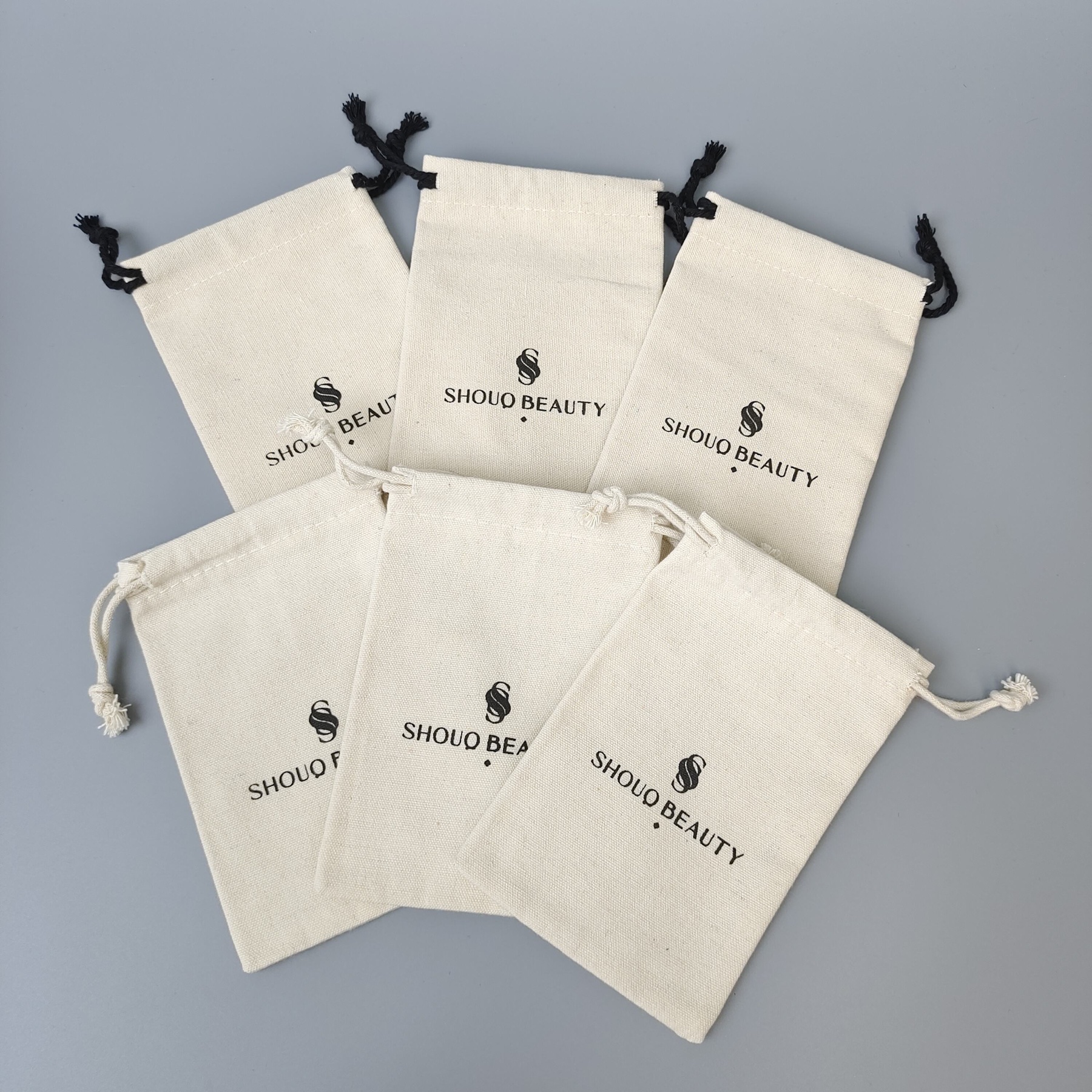
Describe the use and handling route. Retail packaging may need a tidy shelf presentation and easy opening at purchase. Gift packaging can place more emphasis on texture, closure appearance and the reveal. Event or promotional distribution may require staff to fill many bags efficiently. Also explain whether users will carry the pouch briefly, place it inside another bag or store the product in it repeatedly. The Custom Cotton and Jute Drawstring Bags page shows the relevant product format; this article helps turn that visual direction into a buyer-ready brief.
Cotton vs Jute Drawstring Bags
Cotton usually provides a softer hand and a more even printing surface. Natural cotton has a warm, slightly varied tone, while bleached or dyed options create different backgrounds for artwork. The fabric can fold compactly around small products and may suit cosmetics, accessories, gifts and branded sets where a softer presentation is useful. Its appearance still depends on weave, weight, color and finishing, so the word cotton alone is not a complete specification.
Jute has a coarser, more visibly open weave and a firmer, rustic character. It can support gift, seasonal or product packaging where texture is part of the visual direction. That texture can interrupt fine lines, small text and areas of detailed print. Fibers, shade and surface regularity may also vary more visibly than on a smooth cotton cloth. Buyers considering this direction can review the broader custom jute bag range, while remembering that a jute drawstring pouch has different closure and size requirements from a handled shopping tote.
Neither material is universally better. Choose cotton when softness, foldability or a more controlled artwork surface is important; consider jute when a pronounced woven texture and more structured visual character support the product. Then verify the actual proposed fabric, because different cotton and jute constructions behave differently. Avoid selecting either material only from a sustainability slogan. Any environmental or sourcing requirement should be written clearly and supported by documentation relevant to the actual order.
How to Determine the Finished Bag Size
Product dimensions are not automatically finished bag dimensions. A bag measured flat has to open around the product's depth, and fabric is consumed as it wraps the sides. Seams also reduce the usable internal area. A pouch that matches a box's width and height on paper may be too tight to load, distort at the corners or prevent the drawcord channel from closing. Give the supplier the real product dimensions and ask how the proposed finished measurement relates to usable space.
Allow room above the product for the drawstring channel and gathered closure. If the contents reach too close to the top seam, the mouth may remain partly open or the fabric may bunch unevenly. Also consider access: the opening must be wide enough for packing staff or the end user to insert and remove the product without scraping its surface. Clearance should be intentional rather than excessive, because an oversized pouch can look empty, allow items to shift and use more fabric and carton space.
A gusset may help when the contents are thick, boxed or grouped, but it should solve a measured capacity problem. Bottom or side depth changes how the pouch sits, how the artwork appears and how the top gathers. Start with a simple paper or fabric mock-up, then test a sewn sample using the actual packed product. Load and remove the item several times, close the cords fully and check the fit from the front, side and top before confirming the finished dimensions.
Choose the Drawcord and Closure
Cotton cord gives a soft, familiar finish that often coordinates naturally with cotton pouches. Polyester cord may offer a smoother surface, firmer color or different visual contrast. Ribbon can create a gift-oriented appearance where a broader, flatter closure suits the bag and artwork. These are design and handling choices rather than a fixed quality ranking. Ask to see the proposed cord or ribbon with the actual fabric because color, diameter and surface texture can look different in isolation.
Specify cord material, width or diameter, color, number of draw points and end treatment. A narrow cord can look understated on a small pouch, while a broader cord or ribbon becomes a prominent design element. Knotted, heat-finished or otherwise treated ends produce different appearances and should be approved rather than left undefined. If color matching matters, provide a physical reference or recognized color target and confirm what production method is practical for the quantity.
Test how the closure operates when the bag is filled. Both sides should pull without excessive resistance, the channel should gather evenly and the opening should remain practical for repeated use. Ribbon may twist inside a narrow channel; a cord that is too thick for the casing can be difficult to move. Check whether the closed bag needs to be carried by the cords, tied for presentation or simply kept shut inside secondary packaging, then specify the closure around that real action.
Choose Printing Based on Fabric and Artwork
Start with the artwork result, not a preferred process name. Screen printing is often considered for clear solid-color logos on a suitable fabric, especially when the design has limited colors and practical line widths. Heat transfer may be evaluated for gradients, detailed graphics or multiple colors, but it creates a different surface appearance and must be tested on the proposed cloth. The final method depends on artwork, fabric, quantity, print size and desired hand feel.
Embroidery adds stitched texture and can suit a compact mark, but dense designs add thread, time and stiffness to a small pouch. Very fine lettering may not reproduce clearly at a reduced size. A printed or woven label can separate branding from the main fabric and may be useful when a small repeatable identifier is needed, although label material, fold, seam position and attachment all become part of the specification. Do not select a label merely to avoid reviewing the artwork at actual size.
Provide vector artwork when available, identify required colors and state the intended print width, height and position. Keep essential details away from side seams, the bottom fold and the gathered top area. Natural or dyed fabric changes how color is perceived, while coarse jute can break small details. Ask the supplier to recommend a process against the actual artwork and fabric, then approve a printed sample or representative strike-off when color, edge definition or surface feel is commercially important.
What Affects Custom Drawstring Bag Cost
A meaningful cost comparison requires matching specifications. Fabric type, weight, weave, color and availability affect material use and sourcing. Finished width and height determine consumption, while gussets, linings, reinforced seams or unusual construction add cutting and sewing operations. Cord or ribbon material, color, thickness and end treatment also change the scope. A simple stock-fabric pouch cannot be compared directly with a custom-colored bag using special trim.
Decoration cost depends on print method, number of colors, artwork coverage, registration requirements and the number of print positions. Embroidery stitch count, label production and attachment create different work from a single direct print. Quantity affects how setup is distributed, but there is no universal minimum or price curve that applies to every construction. Ask for quotations at realistic quantities and require the supplier to identify any change in material, method or packing between options.
Include development and delivery scope. Sampling, artwork revisions, individual packing, labels, carton configuration and inspection can influence the project total. International shipping is affected by packed carton size, weight, destination and schedule, not only by the number of pouches. Instead of requesting a unit price from a photograph, provide one controlled specification and ask suppliers to state what is included, excluded or assumed. This produces a comparison procurement teams can actually evaluate.
What to Check on a Sample
Review the sample as a functional pack, not only as a branded fabric piece. Measure finished width, height and any gusset using the agreed method. Check seam continuity, top-channel alignment, loose threads and whether the bag sits or folds as expected. Run each cord through the full opening and closing motion. Confirm that knots or end treatments are secure and that both sides gather evenly without pulling the fabric out of shape.
Assess the logo against the approved artwork. Check print size, position, color direction, edge clarity and how the image crosses the fabric texture. Examine the fabric tone, weave and visible variation under normal viewing conditions. A digital mock-up cannot establish these physical characteristics. Record which sample is approved and retain photographs, measurements and written notes so the supplier and buyer are referring to the same construction.
Finally, pack the real product and any secondary components. Confirm that insertion is easy, the contents do not strain seams, the closure gathers above the product and removal does not damage the item or bag. Review the agreed individual packing and folding method as well: a fold across the logo, compressed ribbon or tightly packed carton can change presentation. Approve production only after product fit, bag appearance and packing have been considered together.
- Finished dimensions and usable fit with the real product
- Fabric type, color, weave and surface appearance
- Seams, top channel, gusset and overall construction
- Cord movement, color, thickness and end treatment
- Logo size, position, color and print appearance
- Loading, closing, reopening and product removal
- Individual folding, packing and carton presentation
Custom Drawstring Bag RFQ Checklist
A complete RFQ lets a supplier price the intended bag rather than guessing from a reference photograph. Start with the packed product and distinguish known requirements from areas where you want a recommendation. If the bag size is not confirmed, send product dimensions, photographs and orientation instead of selecting a stock dimension at random. For projects that are still comparing wider packaging options, the MCH product overview provides context without changing the scope of this drawstring-bag brief.
Ask the quotation to repeat the proposed fabric, finished dimensions, cord, print method, quantity, packing and destination. Confirm what kind of sample will be supplied and which characteristics it represents. If an alternative is suggested, request a clear explanation of what changes and why. Send the checklist below with the artwork and use the returned written specification as the basis for sample review and final approval.
- Product to be packed and intended use
- Product length, width, depth and approximate weight
- Required finished bag size, if already known
- Cotton or jute preference and desired color or appearance
- Order quantity for quotation
- Artwork file, colors, print size and position
- Printing or decoration preference, if known
- Cord or ribbon material, color and size preference
- Gusset, lining, label or other construction requirements
- Individual packing and carton requirements
- Destination country or delivery location
- Target delivery date for planning, without assuming a lead time
Related MCH resources
Frequently Asked Questions
How much extra space should a drawstring bag have around the product?
There is no universal allowance. Product depth, seams, fabric behavior, opening access and the space needed above the product for the drawstring channel must be tested together in a sample.
Is cotton or jute better for a custom drawstring bag?
Neither is always better. Cotton generally gives a softer feel and more even print surface, while jute provides a coarser texture and firmer visual character. The right choice depends on the product, artwork and desired presentation.
Which printing method should be used for a detailed logo?
The supplier should assess the artwork, fabric, quantity, print area and desired surface feel. Heat transfer, embroidery or a label may be considered for some detailed designs, but a sample should confirm the actual result.
What should be sent before requesting a drawstring bag quotation?
Send the packed product details, dimensions, quantity, material direction, artwork, cord preference, construction and packing requirements, destination and target delivery date.
Should the sample be tested with the actual product?
Yes. The real packed product is needed to confirm loading clearance, usable space, closure performance, seam stress, presentation and removal before bulk production is approved.